
 EN
EN
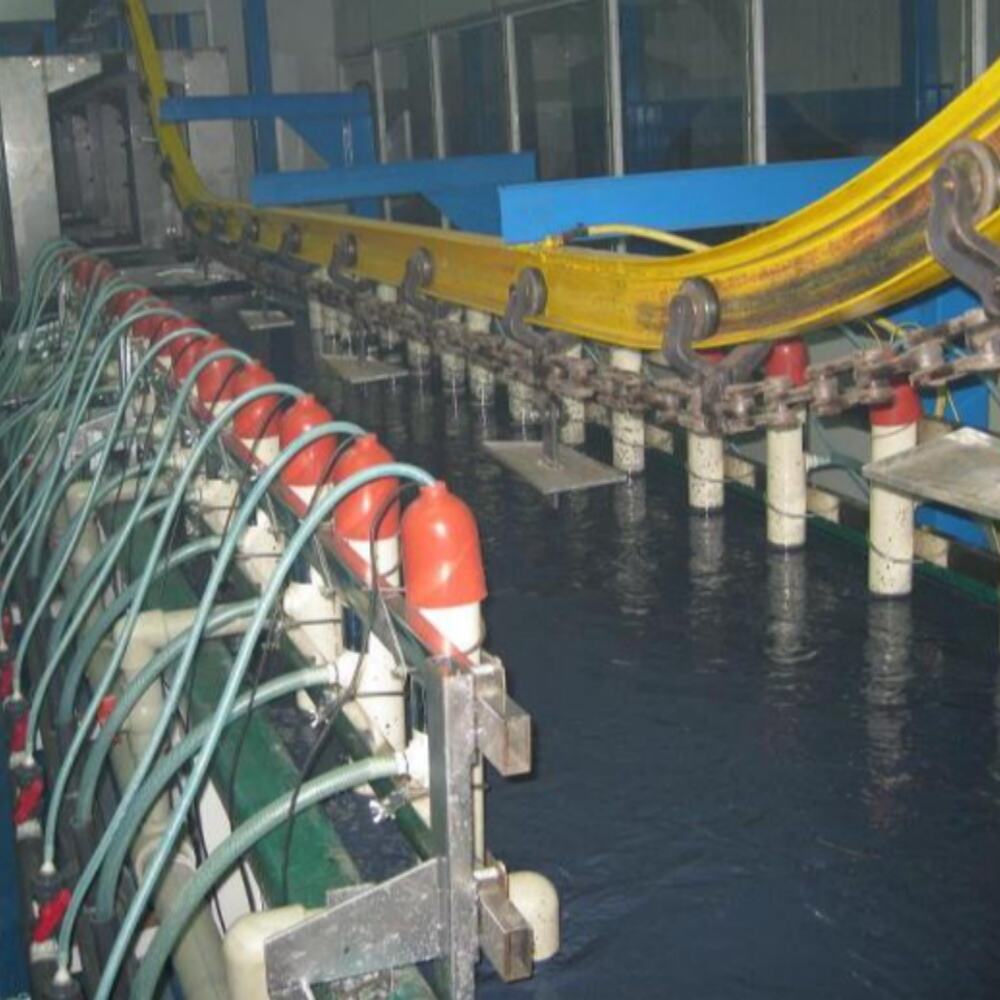
How Electrophoretic Coating Ensures Uniform and Complete Coverage
Uniform film deposition on complex geometries through electrochemical migration
According to the latest data from the 2024 Coating Technology Report, electrophoretic coating lines can reach about 95% coverage efficiency when dealing with complex parts. The way it works is pretty clever actually charged resin particles get pulled along by electric fields to cover those hard to reach spots like inside channels, corners at different angles, and really deep grooves where regular spray methods just don't penetrate well enough. One big advantage over traditional powder coating? No more frustrating Faraday cage issues. This means the coating keeps forming properly right around those tight curves and bends too, something that has been a persistent problem for manufacturers trying to get uniform coverage on complicated shapes.
Complete protection of edges, recesses, and hard-to-reach areas
Immersion based applications offer full 360 degree edge protection, something really important given that around three quarters of all corrosion problems actually start at those edges according to NACE International research from last year. Spray techniques usually manage to deposit less than 12 microns worth of coating material onto those sharp corners, while electrophoretic deposition works much better at strengthening exactly those areas where damage tends to occur first. Car manufacturers have noticed this difference particularly when looking at underbody parts. Their experience shows that vehicles treated with e-coating systems end up with about 40 percent fewer warranty issues related to corrosion compared to what happens with traditional dip coating methods.
Superior coverage at weld seams and inside hidden cavities
Electrophoretic coatings can penetrate cavities up to a 15:1 aspect ratio, outperforming liquid paints by a 3:1 margin. Weld joints receive consistent, uninterrupted film coverage despite surface irregularities, making this method essential for structural components exposed to vibration and thermal stress.
Self-limiting film thickness for consistent, optimal corrosion protection
Voltage regulation enables automatic maintenance of 18–22 μm film thickness, achieving ±1.5 μm consistency across production batches. This self-regulating property prevents over-application and material waste while ensuring complete metal isolation—a distinct advantage over manual spray systems, which can vary by ±8 μm in field conditions .
Dense, Chemically Resistant Coating Formation via Electrodeposition
Electrochemical Deposition Process That Enhances Coating Density and Integrity
Electrophoretic coating lines work based on electrochemical principles that create really dense film layers. Applying voltage causes those charged paint particles to move evenly across whatever surface they're being applied to, sticking there thanks to ionic attraction forces. What makes this method stand out compared to regular spray coatings is that it doesn't leave behind those tiny holes we often see. The result? Nearly complete coverage right around 98% or better even on complicated shapes and angles. Several tests looking at corrosion resistance have shown just how effective these coatings actually are in real world applications.
Formation of a Tightly Cross-Linked, Durable Polymer Film During Curing
During post-deposition curing at 160–200 °C , polymer chains cross-link into a cohesive network with adhesion strengths exceeding 15 MPa. This molecular transformation creates a resilient barrier that resists cracking under mechanical deformation—essential for parts subjected to impact or vibration.
Chemical Resistance Derived From the Cured Epoxy or Acrylic Resin Matrix
Modern electrophoretic coatings utilize advanced epoxy or acrylic resin systems capable of neutralizing corrosive agents. Epoxy-based formulations offer:
- pH resistance from 3 to 12
- Over 5,000 hours of saltwater immersion tolerance
- Resistance to hydrocarbon fluids (ASTM D1308 Class 1A)
A 2023 coating durability study found these resin matrices reduce corrosion rates by 83% compared to conventional coatings.
Role of Baking Cure Cycle in Maximizing Adhesion and Long-Term Stability
Precisely controlled bake profiles—ramping from 80°C to 180°C over 25 minutes—ensure complete solvent evaporation, uniform cross-linking density, and minimized residual stress. This thermal management enhances long-term stability, extending service life by 8—12 years in demanding automotive underbody applications.
Proven Corrosion Resistance: Salt Spray Performance and Real-World Durability
Exceptional Results in Neutral Salt Spray Testing (ASTM B117): Over 1,000 Hours Without Failure
Electrophoretic coatings can last over 1,000 hours in those standard salt spray tests according to ASTM B117 standards, which shows pretty good protection against corrosion. According to some research from the industry back in 2024, these coatings actually perform about three times better than regular zinc coatings when it comes to resisting moisture damage. Of course, nobody should put too much faith in lab tests alone since they don't always match what happens in the real world. But most professionals still think salt spray testing gives useful information, especially when we look at how things hold up over time alongside actual field experience.
Real-World Validation in Automotive Underbody and Industrial Applications
Car companies typically offer corrosion protection guarantees lasting between 12 and 15 years for those parts underneath vehicles that get electrophoretic coating, even when these cars roll through areas where roads are heavily salted during winter months. Manufacturers working with industrial equipment have seen around 40 percent reduction in needed maintenance work when using structural steel with this type of coating compared to traditional powder coatings. Real world testing shows that these electrophoretic coatings hold onto surfaces at least 90 percent as strongly after going through roughly 5,000 temperature swings from freezing cold down to -40 degrees Celsius all the way up to scorching hot 85 degrees Celsius conditions. This kind of durability makes them pretty reliable choices for machinery operating in unpredictable climates.
Growing Adoption in Marine and High-Humidity Environments Due to Reliability
Shipbuilders now specify electrophoretic coatings for ballast tanks and anchor chains, with recent projects achieving 8—10 year service intervals under seawater immersion. The defect-free polymer matrix reduces cathodic delamination risks by 67% compared to spray-applied epoxies, according to 2023 maritime trials.
Limitations Under Extreme Chemical Exposure Despite Strong Corrosion Resistance
Although highly effective against atmospheric and moisture-induced corrosion, electrophoretic coatings degrade faster than PTFE-based systems in environments with pH <2 or >12. Testing on chemical processing equipment revealed degradation at 1.5x the rate under concentrated acid exposure. However, selecting modified acrylic resins can extend chemical resistance thresholds by 30—50% in moderate conditions.
Long-Term Durability and Reduced Maintenance Needs
High Adhesion Strength Under Thermal Cycling and Mechanical Stress
Through electrochemical deposition, electrophoretic coatings form strong molecular bonds with substrates, achieving adhesion exceeding 12 MPa (ASM International 2023). This bond integrity prevents delamination during extreme temperature swings (-40°C to 200°C), making it ideal for engine parts and outdoor infrastructure.
Extended Service Life in Infrastructure and Transportation Applications
Bridges coated with electrophoretic systems show 82% less corrosion damage after 15 years compared to traditionally sprayed coatings. The technology is now used to protect:
- Railway rolling stock exposed to de-icing chemicals
- Offshore wind turbine foundations in saltwater immersion
- Aluminum aircraft components undergoing pressurization cycles
Lower Lifecycle Costs Due to Reduced Recoating and Maintenance Frequency
According to the 2024 Industrial Material Trends Report, electrophoretic coating lines reduce repainting costs by 60% over 10 years in commercial vehicle fleets. The self-healing nature of cured epoxy films limits scratch propagation, while UV-resistant formulations maintain protection without annual touch-ups. These coatings outperform liquid-applied alternatives by 3:1 in accelerated weathering tests.
Electrophoretic Coating vs. Conventional Methods: A Corrosion Resistance Comparison
Superior Edge Coverage and Corrosion Resistance Compared to Powder and Liquid Spray Coatings
E-coating offers significantly better edge protection compared to other methods. Tests show it performs around 40 percent better than powder coatings and roughly 60 percent better than traditional liquid spray approaches because of how it deposits material through electrochemistry. Regular coating methods often run into problems like paint pooling in hard-to-reach areas or creating those pesky Faraday cage effects where certain spots get no coverage at all. E-coating solves this by pulling particles toward every conductive surface evenly. The Surface Engineering Institute did some independent tests last year on automotive hinges and found that parts treated with e-coating had nearly 80 percent fewer instances of corrosion failure compared to those coated using standard spray methods. This makes a real difference in products that need to withstand harsh conditions over time.
This advantage translates directly to longevity. A 2023 FEIHONG Powders study showed e-coated agricultural components lasted 4.2 longer in saline soil exposure, with no edge corrosion observed after 18 months.
Strategic Integration of Electrophoretic Coating Line in High-Reliability Manufacturing Processes
Most car manufacturers around the world go with electrophoretic coating for about 90% of their underbody parts because it holds up so well against corrosion. What makes this process stand out is how it works great with automated systems, giving much better control over coating thickness usually somewhere between 15 to maybe 40 microns thick. This takes away all that guesswork involved when people apply coatings manually. The aerospace industry has seen some impressive results too. Companies making aircraft parts find they don't need to maintain e-coated landing gear as often as other parts. While regular treatments might need touching up every year, these coated components can last roughly three years before needing attention again, which saves both time and money in maintenance costs.
Environmental and Efficiency Advantages Supporting Sustainable Production
Electrophoretic coating lines today manage to recycle around 95 percent of all overspray materials, which is actually way better than what most advanced powder systems can achieve their recovery rates usually hover somewhere between 60 and 75 percent according to the latest Clean Production Alliance findings from 2024. Being water based makes this process much cleaner too since it cuts down volatile organic compound emissions by about 87% when compared with traditional solvent based spraying methods. Plus these systems use roughly 35% less energy per square meter than those infrared cured powder alternatives many factories still rely on. The numbers back this up as well. An Automotive Manufacturing Report published last year showed that electrophoretic coatings have lifecycle costs that are approximately 22% lower for manufacturers running large scale operations. This cost advantage comes mainly from having less wasted material and needing fewer corrections during production runs.
FAQ
What is electrophoretic coating?
Electrophoretic coating, also known as e-coating, is a process that uses electrochemical principles to apply a uniform layer of paint or coating material over complex geometries. It involves charged resin particles being attracted to surfaces through an electric field.
How does electrophoretic coating benefit corrosion resistance?
Electrophoretic coating provides superior corrosion resistance by ensuring complete and uniform coverage of edges, recesses, and complex shapes that are susceptible to corrosion. Its dense and tightly cross-linked polymer film offers extended durability against environmental factors.
What are the environmental advantages of electrophoretic coating?
Compared to conventional methods, electrophoretic coating lines are more sustainable and environmentally friendly. They recycle about 95% of overspray materials and significantly reduce volatile organic compound emissions and energy usage.
Why is electrophoretic coating preferred in automotive applications?
Electrophoretic coating is favored in automotive applications due to its remarkable ability to withstand harsh conditions, reduce maintenance frequency, and extend the service life of underbody parts and components exposed to de-icing chemicals.
Table of Contents
- How Electrophoretic Coating Ensures Uniform and Complete Coverage
- Dense, Chemically Resistant Coating Formation via Electrodeposition
- Electrochemical Deposition Process That Enhances Coating Density and Integrity
- Formation of a Tightly Cross-Linked, Durable Polymer Film During Curing
- Chemical Resistance Derived From the Cured Epoxy or Acrylic Resin Matrix
- Role of Baking Cure Cycle in Maximizing Adhesion and Long-Term Stability
-
Proven Corrosion Resistance: Salt Spray Performance and Real-World Durability
- Exceptional Results in Neutral Salt Spray Testing (ASTM B117): Over 1,000 Hours Without Failure
- Real-World Validation in Automotive Underbody and Industrial Applications
- Growing Adoption in Marine and High-Humidity Environments Due to Reliability
- Limitations Under Extreme Chemical Exposure Despite Strong Corrosion Resistance
- Long-Term Durability and Reduced Maintenance Needs
- Electrophoretic Coating vs. Conventional Methods: A Corrosion Resistance Comparison
- FAQ