
 EN
EN
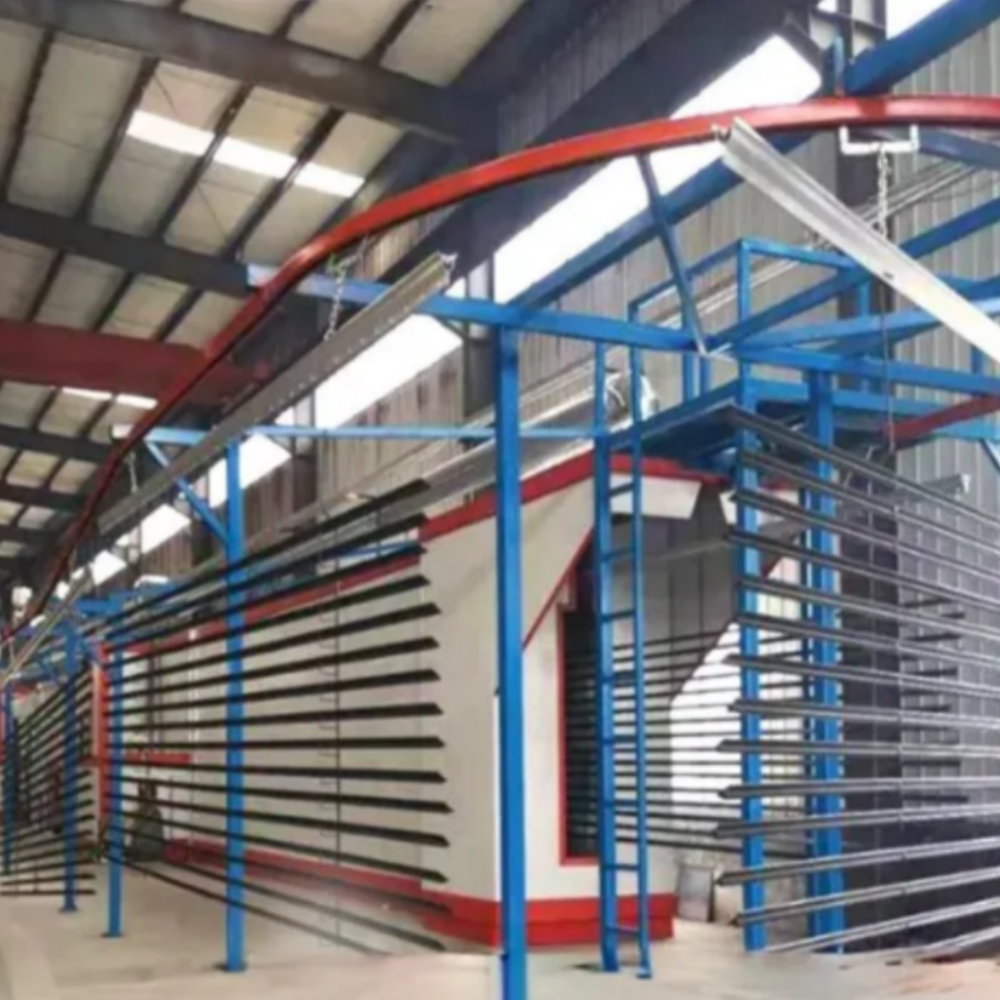
Precision Powder Delivery: The Core of 99% System Consistency
Achieving a 99% consistency rate in industrial finishing requires foundational precision in material handling. At the heart of reliable powder coating system performance lies advanced feeder technology that minimizes dosage variation.
Volumetric vs. Gravimetric Feeders: Real-World Throughput and CV Performance
Gravimetric systems work by measuring actual powder mass instead of just guessing based on volume, so they can handle those tricky density changes that throw off other methods. These systems typically maintain pretty steady flow rates most of the time, with variations staying under around 1.5% even when running at full speed for production work. That's actually quite impressive compared to volumetric systems, which basically just push material through based on space measurements. But there's a problem here because these volumetric approaches tend to get worse over time when dealing with fluffy or air-filled materials. Sure, volumetric equipment is simpler to set up initially, but after several hours of operation, their accuracy drops significantly. We've seen cases where the output varies by as much as 3.7% over long periods. When manufacturers are aiming for that sweet spot of 99% consistent performance across shifts, this kind of inconsistency becomes a real headache in operations management.
Minimizing Pneumatic Turbulence and Hopper-Induced Variation
Issues with secondary flows are actually one of the main reasons we see performance problems in these systems. When hoppers are designed right with those 15 to 20 degree wall angles plus proper fluidizing bases, they stop ratholing from happening which means way fewer flow stoppages overall maybe around 70% less according to field tests. For pneumatic transport setups, getting the air to powder ratio just right matters a lot too usually somewhere between 0.8 to 1.2 parts air per part powder works best. Keeping hoses as straight as possible helps maintain that smooth laminar flow everyone wants. And don't forget about how important it is to stage air pressure properly through different transfer points. This approach can cut down on waste caused by turbulence by about 30%. The end result? Feeders work much better when there's less turbulence messing things up, so what comes out at the application point stays consistent across the board.
Electrostatic Spray Control: Ensuring Stable Charge and Uniform Deposition
Corona vs. Tribo Charging: Transfer Efficiency and Film Thickness CV Data
The electrostatic deposition methods known as corona and tribo charging work in completely different ways. With corona charging, high voltage electrodes create ions in the air that make the powder stick to surfaces. Works pretty well for basic shapes, getting around 60 to 70% transfer efficiency. But when dealing with complicated parts, the film thickness can vary quite a bit - sometimes up to 12% because of those pesky Faraday cage effects everyone talks about. Tribo charging takes another route altogether. The powder gets charged through friction inside special polymer barrels, which gives each particle a more uniform charge right from the start. Transfer efficiency isn't as good here, usually between 40 and 60%, but there's something interesting happening with film thickness. Tests show it stays remarkably consistent at less than 5% variation no matter what shape the part is. Real world tests back this up too. Tribo systems keep their charge-to-mass ratio stable at about ±0.02 mC/kg while corona systems fluctuate more wildly at ±0.08 mC/kg even when humidity levels stay exactly the same.
Real-Time Voltage Feedback Loops for Dynamic Electrostatic Compensation
Today's powder coating equipment now features closed loop controls that tackle electrostatic drift problems head on. These systems use infrared sensors to check how much powder actually sticks to surfaces, then tweak the voltage settings every 100 milliseconds automatically. This helps eliminate those pesky issues with ionization decay when humidity levels rise, something that used to create about 15 to 20 percent variations in coating thickness. Environmental sensors watch for changes in conductivity too, allowing controllers to adjust waveform frequencies so they can maintain voltage stability within plus or minus 0.5 kilovolts, whereas older systems would fluctuate around plus or minus 5 kV. Some of the newer models even account for different part shapes during operation, cutting down edge buildup by roughly 30 percent. At the same time, first pass transfer efficiency jumps up to 80 percent thanks to smart current adjustments. What does all this mean? Consistent charging across production runs lasting over eight hours, with charge variation staying under 3 percent throughout.
Thermal Curing Uniformity: Meeting ASHRAE Class A Standards for 99% Consistency
Getting consistent results from thermal curing is really what makes or breaks achieving that 99% consistency target most manufacturers aim for. According to ASHRAE's Class A guidelines, the whole oven space needs to stay within a narrow temperature range of plus or minus 5 degrees Fahrenheit (about 2.8 degrees Celsius). When companies hit these numbers, they avoid those pesky hot and cold areas inside the oven that lead to problems during the cross-linking process. These inconsistencies actually account for around 7% of rejected products in facilities that don't meet the standards. Modern industrial ovens tackle this challenge through several key innovations. They typically feature multiple heating zones, airflow systems designed using complex computer modeling, and special infrared sensors that check surface temps every fifteen seconds or so. All these technologies work together to ensure materials transform uniformly at the molecular level. This means no more soft spots from under-curing or brittle sections caused by over-curing, plus film thickness stays pretty much exactly the same throughout production runs, varying less than 0.2 mils from one piece to another.
Grounding Integrity and Fixture Maintenance: Eliminating the Hidden 3â7% Failure Mode
Resistance Testing Protocols That Expose Ground Path Degradation
When grounding isn't done right, it hides trouble spots all through powder coating operations. Stray electrical currents mess with the electrostatic fields during application, which leads to those annoying Faraday cage issues and patchy coatings that nobody wants. Most problems start showing up when surface resistance goes over 10 megohms, according to what we see in the field. Shops report around 3 to 7 percent of their rejected parts come back to poor grounding practices. Checking resistance regularly catches these issues before they actually affect product quality. Techs need to run continuity tests along the ground path at least once a week with proper megohmmeters, preferably ones that can handle at least 1,000 volts DC for accurate readings. Keep records of resistance measurements specifically at important locations like gun handles, conveyor hooks, and those tricky oven rails where connections tend to loosen over time. Thermal imaging equipment also helps spot hot areas that signal loose or failing connections somewhere in the system. Plants that stick with these maintenance routines cut down on grounding problems by about 80 percent based on our observations across different facilities. Good grounding maintenance stops being just another box to check off regulations when companies treat it seriously as part of their overall quality control strategy.
Frequently Asked Questions
What are the key factors in achieving 99% consistency in industrial finishing?
The key factors include precision in material handling, advanced feeder technology to minimize dosage variation, controlling electrostatic spray deposition, ensuring thermal curing uniformity, and maintaining effective grounding integrity.
Why is gravimetric feeding preferred over volumetric feeding?
Gravimetric feeding is preferred because it measures the actual powder mass, handling tricky density changes better than volumetric feeding, which estimates based on volume and typically shows greater inconsistency over time.
What techniques can improve pneumatic transport performance?
Techniques include minimizing hopper-induced variation, getting the air to powder ratio correct, maintaining straight hoses for laminar flow, and properly staging air pressure through transfer points.
How do corona and tribo charging differ in electrostatic spray control?
Corona charging uses high voltage electrodes to ionize the air, while tribo charging relies on friction inside polymer barrels to charge particles uniformly, showing less variation in film thickness.
How does grounding impact powder coating operations?
Improper grounding leads to stray electrical currents that can disrupt electrostatic fields during application, causing issues like Faraday cage effects and patchy coatings. Regular resistance testing helps to prevent such issues.
Table of Contents
- Precision Powder Delivery: The Core of 99% System Consistency
- Electrostatic Spray Control: Ensuring Stable Charge and Uniform Deposition
- Thermal Curing Uniformity: Meeting ASHRAE Class A Standards for 99% Consistency
- Grounding Integrity and Fixture Maintenance: Eliminating the Hidden 3–7% Failure Mode
-
Frequently Asked Questions
- What are the key factors in achieving 99% consistency in industrial finishing?
- Why is gravimetric feeding preferred over volumetric feeding?
- What techniques can improve pneumatic transport performance?
- How do corona and tribo charging differ in electrostatic spray control?
- How does grounding impact powder coating operations?