
 EN
EN
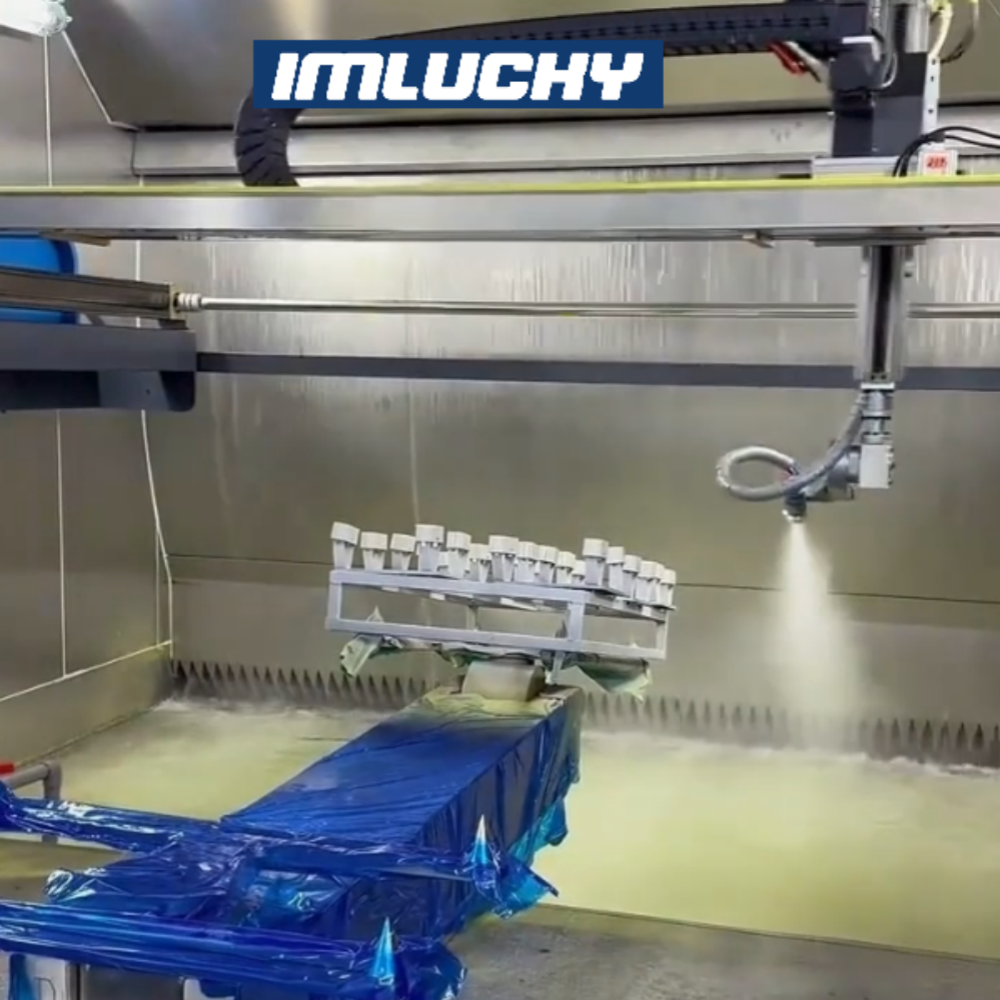
Maximize Paint Efficiency with Advanced Transfer Technologies
Electrostatic Charging and HVLP Technology for Transfer Efficiency Above 85%
Today's automatic coating machines rely on electrostatic charging to generate attraction between paint particles and surfaces that are grounded. These machines work best when combined with what's called High Volume Low Pressure or HVLP technology. This system breaks down coatings by blowing them apart with lots of air but at pressure levels under 10 psi. The result? Transfer efficiency rates above 85 percent in most cases. Traditional spray methods typically lose about half their material as wasted overspray, sometimes even more. Electrostatic HVLP works differently because the charged particles actually cling to all sides of complicated shapes. This means better coverage overall while cutting down significantly on wasted materials during production runs.
Rotary atomizing bells really boost this whole process since they spin around at crazy speeds between 30k to 50k RPM, which helps control exactly where those tiny paint particles go. Because of how well they work, these bells are pretty much the go-to choice when it comes to getting those top notch finishes needed for things like car clearcoats, where every little spot needs to look just right. And let's talk about money saved here too. When looking at actual numbers, facilities that go through about 1,000 gallons of paint each month can actually pocket something like $18k extra per year just from cutting down on wasted materials. That kind of saving adds up fast for anyone running a painting operation.
Overspray Reduction Systems with Real-Time Fluid Adjustment
Smart fluid control systems use Internet of Things sensors along with machine vision technology to make real time adjustments to things like viscosity, pressure levels, and how fast fluids move through the system while it's running. When parts need spraying, these advanced systems can spot where they are positioned and change the width of the spray fan in about half a second or so, keeping everything at just the right distance from what needs coating. Another big plus is that when there's no actual spraying happening, the system turns itself off automatically. This simple feature cuts down on wasted material significantly – somewhere between sixty to eighty percent less overspray than what happens with traditional manual techniques.
High-speed pressure transducers sampling at 200Hz enable micro-adjustments that sustain transfer efficiency across irregular surfaces like turbine blades or bicycle frames. This level of precision helps avoid the $740,000 in annual waste per facility cited in industry studies (Ponemon 2023), while also supporting compliance with environmental regulations.
Evaluating Cost-Effectiveness: Is High Transfer Efficiency Worth It for Low-Volume Production?
For low-volume manufacturers, the return on investment depends on three key factors:
- Material costs: Coatings priced above $100/gallon justify efficiency investments more quickly
- Compliance requirements: Facilities needing to meet VOC limits below 2.1 lbs/gal benefit significantly from reduced overspray
- Changeover frequency: If setup times exceed 30 minutes, quick-cleaning systems may offset some efficiency gains
| Production Volume | Payback Period | Efficiency Threshold |
|---|---|---|
| < 500 units/month | 18–24 months | 75% TE minimum |
| 500–2,000 units/month | 12–18 months | 80% TE recommended |
| > 2,000 units/month | < 12 months | 85% TE ideal |
Small-batch operations should consider modular automatic coating machines with scalable efficiency features rather than full automation, balancing performance with capital expenditure.
Ensure High-Precision Application Through Advanced Motion and Spray Control
Achieving ±0.1 mm Accuracy with Servo-Driven Motion Control
Servo-driven motion control enables application accuracy within ±0.1 mm, driven by high-resolution encoders and closed-loop feedback systems that continuously monitor robotic arm positioning. In aerospace and medical device manufacturing—where coating thickness tolerances are strict—this precision eliminates rework and ensures consistent material deposition.
The system compensates for part geometry variations during high-speed production, maintaining uniform coverage across edges and contours. Elimination of mechanical backlash ensures repeatable, reliable paths over thousands of cycles, directly increasing first-pass yield rates and minimizing material waste.
Intelligent Path Tracking and Programmable Spray Patterns
Intelligent path tracking synchronizes spray dynamics with robotic motion to maintain optimal nozzle orientation and standoff distance. Machine learning algorithms analyze part blueprints to generate collision-free trajectories, adjusting for thermal expansion or conveyor speed fluctuations in real time.
Operators can program custom spray patterns—from concentric circles to adaptive crosshatches—reducing manual setup time for specialized applications like turbine blade coating or electronic encapsulation. Real-time pressure modulation preserves pattern integrity during directional changes, preventing drips and uneven buildup.
This programmability supports rapid changeovers between batches, making high-mix production lines more efficient and economically viable.
Select the Right Automatic Coating Machine for Your Materials and Applications
Material Compatibility: Paints, Primers, Sealants, and Functional Coatings
Choose an automatic coating machine compatible with your specific materials—whether solvent- or water-based paints, UV-cured primers, epoxy sealants, or conductive functional coatings. Incompatibility can lead to adhesion failure or equipment damage. For example, high-viscosity sealants require pressurized pumps, while metallic coatings demand electrostatic compatibility.
Modular nozzles and fluid paths allow seamless switching between materials such as:
- Low-VOC paints (⩽ 50 g/L)
- High-build primers (viscosity > 500 cPs)
- Abrasion-resistant ceramic coatings
| Selection Criteria | Impact on Compatibility |
|---|---|
| Fluid Viscosity Range | Prevents clogging and ensures proper atomization |
| Chemical Resistance | Avoids degradation when exposed to aggressive solvents |
| Curing Mechanism Support | Matches UV, thermal, or air-dry curing requirements |
Application Flexibility Across Industries and Part Geometries
Optimize your automatic coating machine for diverse part shapes—from flat panels to complex 3D contours—and industry-specific standards. Automotive components require ±0.05 mm edge precision, while furniture production demands wide, even coverage on curved surfaces.
Reciprocating sprayers efficiently coat flat parts like cabinet doors, whereas rotary systems excel on intricate geometries such as turbine blades. Key flexibility features include:
- Adjustable spray width (50–1000 mm)
- Multi-axis robotic articulation
- Quick-change fixtures for batch sizes ranging from 10 to 10,000 units
FAQs
What are the main benefits of using electrostatic HVLP technology?
Electrostatic HVLP technology provides superior transfer efficiency and coverage, significantly reducing wasted materials compared to traditional spray methods.
How do smart fluid control systems contribute to overspray reduction?
Smart fluid control systems make real-time adjustments to spraying parameters, significantly decreasing overspray by turning off the system automatically when not in use.
Is high transfer efficiency suitable for low-volume production?
Yes, but the return on investment depends on factors like material costs, compliance requirements, and changeover frequency.
What is the importance of material compatibility in automatic coating machines?
Material compatibility ensures optimal performance and avoids issues like adhesion failure or equipment damage.