
 EN
EN
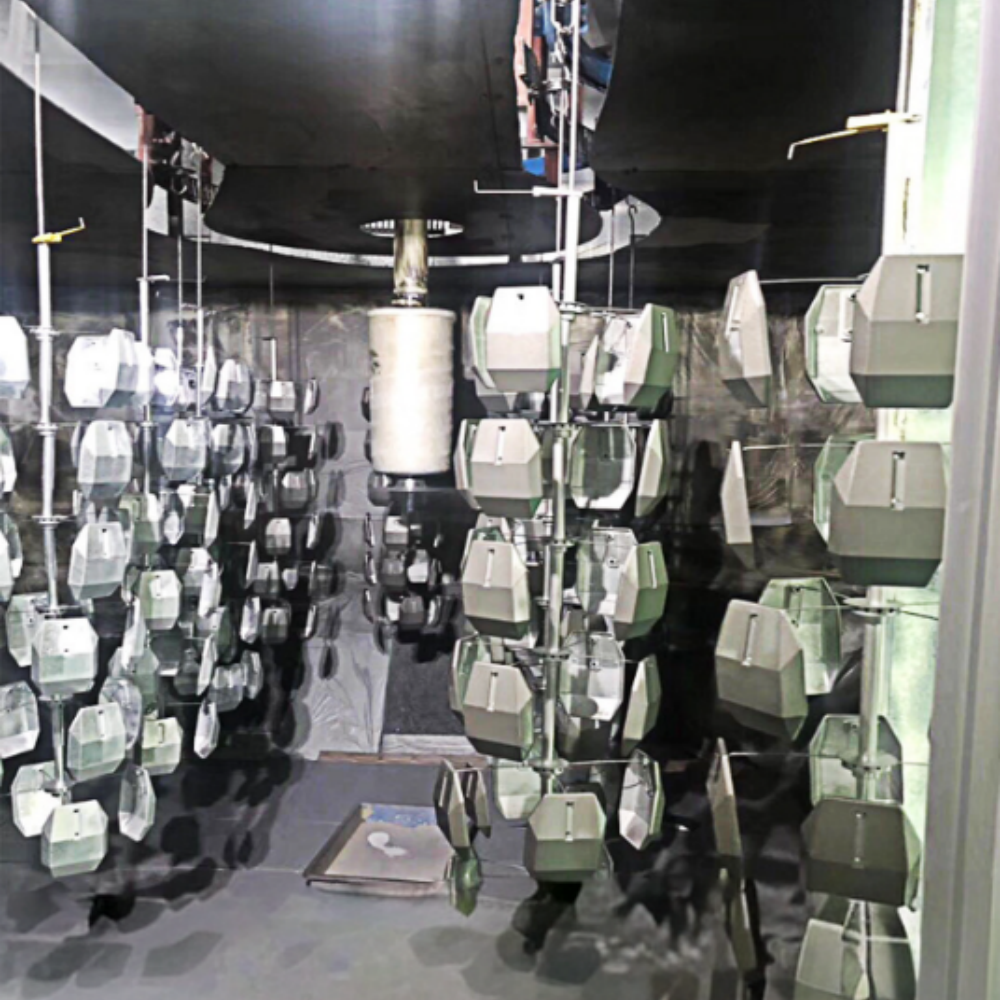
How Modern E-Coating Lines Enable Reliable Coating of Plastics
Overcoming the Conductivity Barrier: Advances in Conductive Primers and In-Line Charge Enhancement
Back in the day, putting coatings on non-conductive plastics meant making compromises somewhere along the line between how long things lasted, how fast they could be processed, and how complicated the whole operation got. Modern e-coating lines have cracked this problem using conductive primers together with integrated charge enhancement techniques. This means no longer needing to metallize substrates while still getting even electrostatic deposits onto those tricky shapes and angles. The primers actually create tiny conductive paths all over plastic surfaces. This stops that annoying edge pullback effect and lets the coating stick properly without damaging the parts themselves. According to research published in Surface Engineering Journal last year, these new methods cut down pretreatment steps by about forty percent when compared to older methods from years past. When paired with inline charge amplifiers that adjust field strength as needed, today's systems really outperform what was possible before.
- 24-hour production cycles with 2% reject rates
- Primer layers as thin as 8 μm, retaining 98% adhesion per ASTM D3359
- 30% lower energy consumption versus conventional two-stage spray-and-cure processes
Polymer Compatibility Expansion: ABS, PC, PPA, and Blends Validated for High-Volume E-Coating Lines
Material versatility is now a core capability—not an afterthought. Rigorous validation across Tier 1 automotive suppliers confirms that engineering thermoplastics—including ABS, polycarbonate (PC), polyphthalamide (PPA), and their blends—perform reliably in fully automated e-coating lines. All meet OEM-specified thresholds for structural and environmental performance:
| Property | ABS-PC Blend | PPA | Requirement |
|---|---|---|---|
| Adhesion | 25 MPa | 28 MPa | >20 MPa (ASTM D3359) |
| Thermal Shock | 200 cycles | 240 cycles | >150 cycles (−40°C – 80°C, ASTM D638) |
| UV Resistance | 1,500 hours | 2,000 hours | >1,000 hours (SAE J2527) |
This validated compatibility supports lightweighting strategies: e-coated plastic brackets replace stamped steel counterparts, cutting part weight by 60% while satisfying OEM corrosion requirements—including 1,000+ hour salt-spray resistance (ASTM B117).
Precision Performance: Uniform Coverage and Thickness Control on Non-Conductive Substrates
Getting consistent film thickness on plastic parts is still quite challenging because plastics are basically insulators. Conductive metals work much better with standard processes, but when dealing with materials like ABS/PC blends, manufacturers need special setups in their e-coating lines just to get even coverage across all those tricky areas. Think about those hard to reach corners, deep recesses, or really curved surfaces where paint tends to either pile up or completely miss. The good news is modern coating systems now handle these issues through real time adjustments to voltage levels combined with robots that can precisely control application parameters. These advancements help compensate for all sorts of shape irregularities that used to create problems like thick edges or dangerously thin sections in critical areas.
Real-World Thickness Consistency: ±0.5 μm Tolerance Achieved on ABS/PC Blends (2023 OEM Benchmark)
Leading automakers now sustain a ±0.5 μm thickness tolerance on ABS/PC components—a 60% improvement over 2020 industry baselines. This micron-level control is enabled by three synergistic advancements:
- Dynamic Current Monitoring: Real-time amperage mapping across part surfaces triggers automatic dwell-time adjustments mid-process.
- Robotic Manipulation: 6-axis articulation ensures optimal anode alignment during immersion, maximizing field uniformity.
- Rheology-Optimized Baths: Low-viscosity, high-solids formulations minimize sag on vertical surfaces while enhancing edge coverage.
Such precision directly enhances functional performance: consistent thickness improves corrosion resistance and surface aesthetics, reducing rework by 34% in high-volume production. It also validates e-coating as a technically viable, scalable alternative to spray-based methods—even for safety-critical plastic components.
Optimized Pretreatment for Plastic E-Coating Lines
Plasma Activation vs. UV-Ozone: Throughput, Adhesion Performance, and Integration into Automated E-Coating Lines
Effective pretreatment is foundational—not optional—for durable e-coating on plastics. Plasma activation and UV-ozone treatment have emerged as the dominant non-chemical alternatives, each suited to distinct production contexts:
| Factor | Plasma Activation | UV-Ozone Treatment |
|---|---|---|
| Throughput | <60 seconds per part | 2–5 minutes per part |
| Adhesion Strength | 25–35 MPa on PPA blends | 18–25 MPa on ABS/PC |
| Line Integration | Fully compatible with high-speed conveyors | Limited by chamber size and exposure geometry |
Plasma activation gives better throughput rates and works well with various shapes and sizes, which is why many manufacturers prefer it for inline setups in car and appliance e-coating processes. UV ozone treatment does offer more precise surface modification though it tends to be slower and harder to scale up for large production runs. What both methods have in common is they replace those old school acid etching and chromate treatments that create so much waste water. According to Surface Engineering Journal from last year, these new approaches cut down on wastewater by around 40%. That kind of reduction matters a lot now as environmental rules keep getting stricter across the manufacturing sector.
Industry-Specific Value Drivers of Plastic E-Coating Lines
Modern e-coating lines bring together precision, repeatability, and sustainability in ways that make them essential for industries where quality matters most. Take automotive manufacturing for instance. Conductive primers combined with adaptive deposition techniques give full coverage against corrosion on those complicated polymer parts. This helps manufacturers meet their weight reduction targets while still passing the tough 1,000-hour salt spray test according to ASTM B117 standards. For medical device makers, the process creates completely smooth, bacteria resistant surfaces on polymer implants. These coatings satisfy ISO 10993 requirements without needing extra steps after coating that might compromise sterility. Electronics companies find value too. They need consistent dielectric properties when making housings for 5G PCBs, achieving tolerances around plus or minus 0.3 microns to avoid signal problems and interference issues. What really stands out though is how closed loop systems work. These setups can recover over 95% of paint materials, cutting down both VOC emissions and waste disposal costs by roughly 30 to 45% compared to traditional solvent based methods. This kind of efficiency doesn't just look good on paper it actually aligns with what regulators want and what investors care about these days.
Frequently Asked Questions
What are the main advantages of modern e-coating lines for plastic materials?
Modern e-coating lines allow for consistent electrostatic coating on plastics without the need for metallization, reduce pretreatment steps, decrease energy consumption, and improve overall production efficiency.
How do conductive primers and in-line charge enhancement work together?
Conductive primers create tiny conductive paths over plastic surfaces, allowing the coating to adhere properly, while in-line charge enhancement techniques adjust the field strength to ensure even electrostatic deposition on complex shapes.
What polymers have been validated for high-volume e-coating lines?
Engineering thermoplastics such as ABS, polycarbonate (PC), polyphthalamide (PPA), and their blends have been validated for reliable performance in fully automated e-coating lines.
What pretreatment methods are prominent in e-coating lines for plastics?
Plasma activation and UV-ozone treatment are the dominant non-chemical pretreatment methods for plastic e-coating lines, providing effective substrate preparation without relying on traditional chemical processes.
How do modern e-coating lines impact the environment?
E-coating lines improve efficiency through closed-loop systems that recover paint materials, significantly reduce VOC emissions, and decrease waste water disposal by up to 40% compared to traditional techniques.
Table of Contents
- How Modern E-Coating Lines Enable Reliable Coating of Plastics
- Precision Performance: Uniform Coverage and Thickness Control on Non-Conductive Substrates
- Optimized Pretreatment for Plastic E-Coating Lines
- Industry-Specific Value Drivers of Plastic E-Coating Lines
-
Frequently Asked Questions
- What are the main advantages of modern e-coating lines for plastic materials?
- How do conductive primers and in-line charge enhancement work together?
- What polymers have been validated for high-volume e-coating lines?
- What pretreatment methods are prominent in e-coating lines for plastics?
- How do modern e-coating lines impact the environment?