
 EN
EN
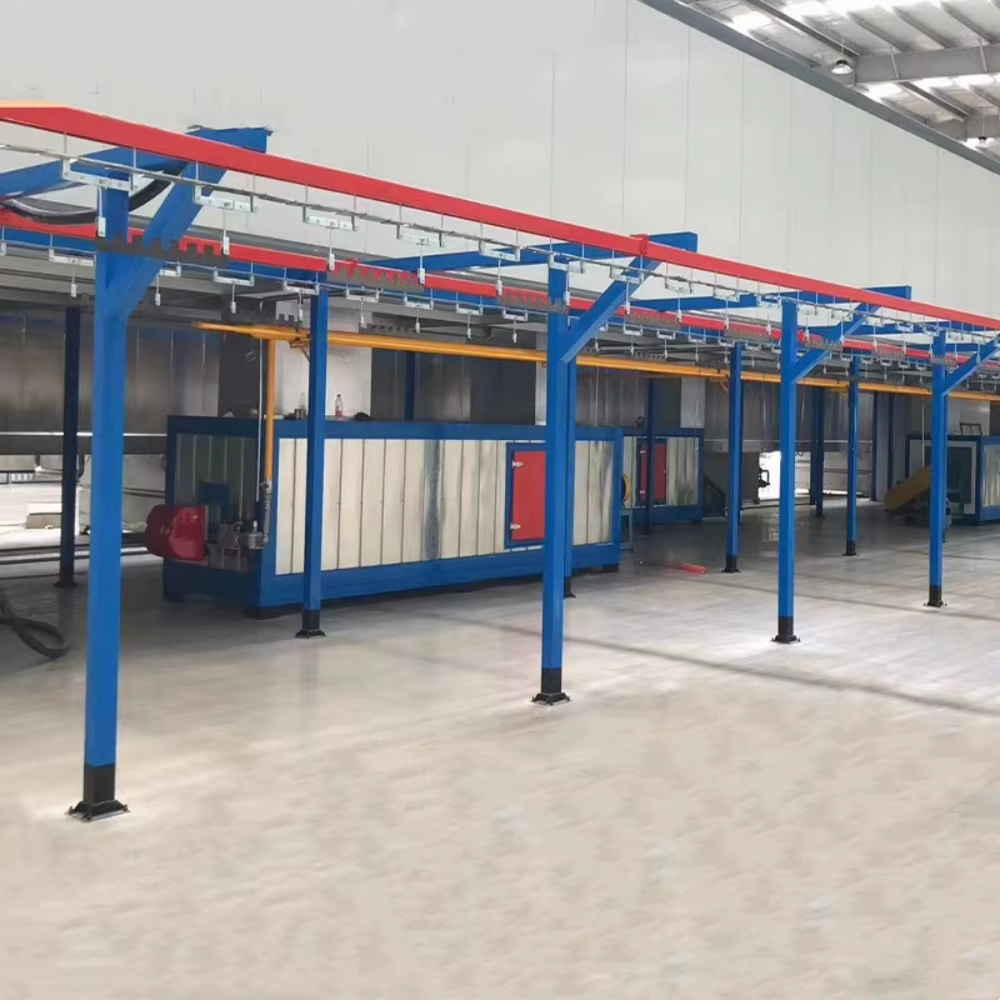
How E-Coating Lines Achieve Unmatched Corrosion Resistance
E-coating lines deliver exceptional corrosion protection through two synergistic mechanisms: electrophoretic deposition and cathodic epoxy chemistry. This combination creates impermeable, molecularly bonded barriers on automotive substrates—outperforming traditional methods in harsh operating environments.
Electrophoretic Deposition: Uniform Coverage on Complex Automotive Geometries
Electrophoresis works by submerging parts into a tank filled with electrically charged paint solution. What happens next is pretty amazing – those tiny paint particles actually move evenly over every surface, even reaching into hard to access spots and inside complex shapes that traditional spray techniques just can't touch. The process creates a coating layer between 15 to 35 microns thick, with very little variation (less than 5%) across the entire part. This means no gaps where rust could start forming, which matters a lot for complicated undercarriage parts such as suspension components or braking systems. And here's something interesting about the numbers: most manufacturers report around 99.5% coverage on edges and corners too, so there's almost nowhere for corrosive substances to get through and cause damage over time.
Cathodic Epoxy Chemistry: Electrochemical Barrier Formation and Adhesion Mechanisms
Cathodic epoxy formulations create self-healing barriers through electrochemical reactions during deposition. When current flows, hydroxide ions generate at the cathode (part surface), raising local pH and triggering cross-linking. This forms:
- A zinc-phosphate integrated layer that bonds molecularly to metal substrates
- A hydrophobic epoxy matrix that blocks moisture diffusion
- pH-responsive pigments that neutralize corrosive agents
The resulting coating withstands 1,000+ hours in ASTM B117 salt spray testing while maintaining >8 MPa adhesion strength after thermal cycling. This dual-action protection—barrier formation plus active corrosion inhibition—enables automotive parts to endure 15+ years in road salt environments.
The End-to-End E-Coating Line Process: Immersion, Rinsing, and Curing
Critical Process Parameters: Voltage, Time, Temperature, and Rinse Efficiency Control
Getting coating performance right depends on controlling four main factors accurately. The voltage level usually ranges from around 100 to 400 volts and affects how thick the film becomes as well as how fast it deposits onto surfaces. Immersion time typically lasts between 90 and 180 seconds which gives parts enough time to get fully covered. Bath temperatures need to stay within 20 to 30 degrees Celsius range to keep the solution at just the right consistency for even coatings. What matters most though is making sure the rinse after immersion works properly. When checking rinse effectiveness, technicians look for conductivity readings under 20 microsiemens per centimeter because this indicates residual paint has been washed away before the curing process starts. According to industry reports, poor rinsing leads to problems in about 6 out of 10 cases where coatings fail to stick properly, and nearly 8 out of 10 instances where craters form in the finished product. Modern facilities often install multiple rinse tanks arranged in sequence along with reverse osmosis filtered water to flush out impurities that would otherwise weaken the protective properties against corrosion.
Smart Optimization: Real-Time Conductivity Monitoring and AI-Driven Bath Management
Today's e-coating systems are starting to incorporate machine learning techniques that change how we maintain baths from just reacting to problems to actually predicting them ahead of time. These systems have continuous conductivity sensors that monitor paint solids levels pretty accurately around 0.5% variance, which then automatically triggers refills whenever things start drifting out of range. The AI behind these systems looks at all sorts of historical data from the baths including those tricky voltage curves and amperage readings to figure out what parameters need adjusting even before quality issues show up on the line. What does this mean practically? Well, manufacturers report saving about 18% on their paint usage and cutting down curing energy costs by roughly 12%. Plus it stops those annoying orange peel textures and incomplete curing that so often lead to poor corrosion protection in finished products.
Strategic Value of E-Coating Lines in Automotive Manufacturing
Lifecycle Cost Savings via Extended Underbody Durability and Reduced Warranty Liability
Car makers are seeing big savings over time when they switch to e-coating lines for their vehicles. These systems make underbody parts last much longer and cut down on warranty issues. The electrophoretic process forms a solid, gap-free layer that stands up to rust about 5 to 7 times better than regular spray coatings according to recent industry tests from 2024. Longer lasting parts mean fewer replacements needed and less downtime on assembly lines. What really matters though is how well the coating sticks to those tough suspension parts where stress builds up. This sticking power stops peeling and reduces early failures significantly. Look at the numbers too: corrosion problems alone cost car companies around $740,000 every year in warranty claims according to a Ponemon Institute report last year. So e-coating isn't just good for the environment, it actually protects company bottom lines. Plus, automated systems managing the coating baths save even more money by using 18 to 22 percent less paint compared to traditional methods while also getting rid of those pesky coating flaws that lead to product recalls.
Comparative Advantages of Modern E-Coating Lines vs. Alternative Finishing Methods
E coating systems beat traditional approaches such as powder coating and liquid spraying mainly because of three key benefits. First off, electrophoretic deposition ensures even coverage across all surfaces including those tricky recessed spots and complicated shapes. This solves the problem of Faraday cage effects that plague spray techniques and lead to patchy coatings. Industry tests show around 30 to 50 percent fewer defects overall. The second major plus is corrosion resistance. Cathodic epoxy creates an electrochemical barrier that lasts much longer than regular finishes. Parts treated this way typically last 2 to 3 times longer according to accelerated salt spray tests. Third, there are significant environmental and cost savings. E coating gets about 95% paint usage while spray methods only manage 60 to 70%. That means far fewer VOCs and hazardous waste going into landfills. Plus, automation reduces labor needs by roughly 40% and stops the inconsistent film thickness issues that happen with manual application. For auto manufacturers concerned about both product longevity and green manufacturing, these factors combine to make e coating lines the smart choice when durability, eco-friendliness, and accurate application are priorities.
FAQ
What is e-coating in automotive manufacturing?
E-coating, or electrophoretic coating, is a process used in automotive manufacturing to apply a uniform and corrosion-resistant coating to vehicle parts through an electrically charged paint solution.
How does electrophoretic deposition work?
Electrophoretic deposition works by submerging vehicle parts into a tank with charged paint particles that evenly cover all surfaces, including complex geometries, to prevent rust formation.
What are the advantages of e-coating compared to spray and powder coating methods?
E-coating is advantageous over spray and powder methods due to its uniform coverage, superior corrosion resistance, environmental benefits, and cost and labor savings.
How does e-coating contribute to cost savings?
E-coating contributes to cost savings by extending part durability, reducing warranty claims, and using less paint and energy, which translates to lower manufacturing costs.
What technological improvements have been made in e-coating lines?
Recent improvements in e-coating lines include AI-driven bath management and real-time conductivity monitoring to optimize coating performance and predict issues before they occur.