
 EN
EN
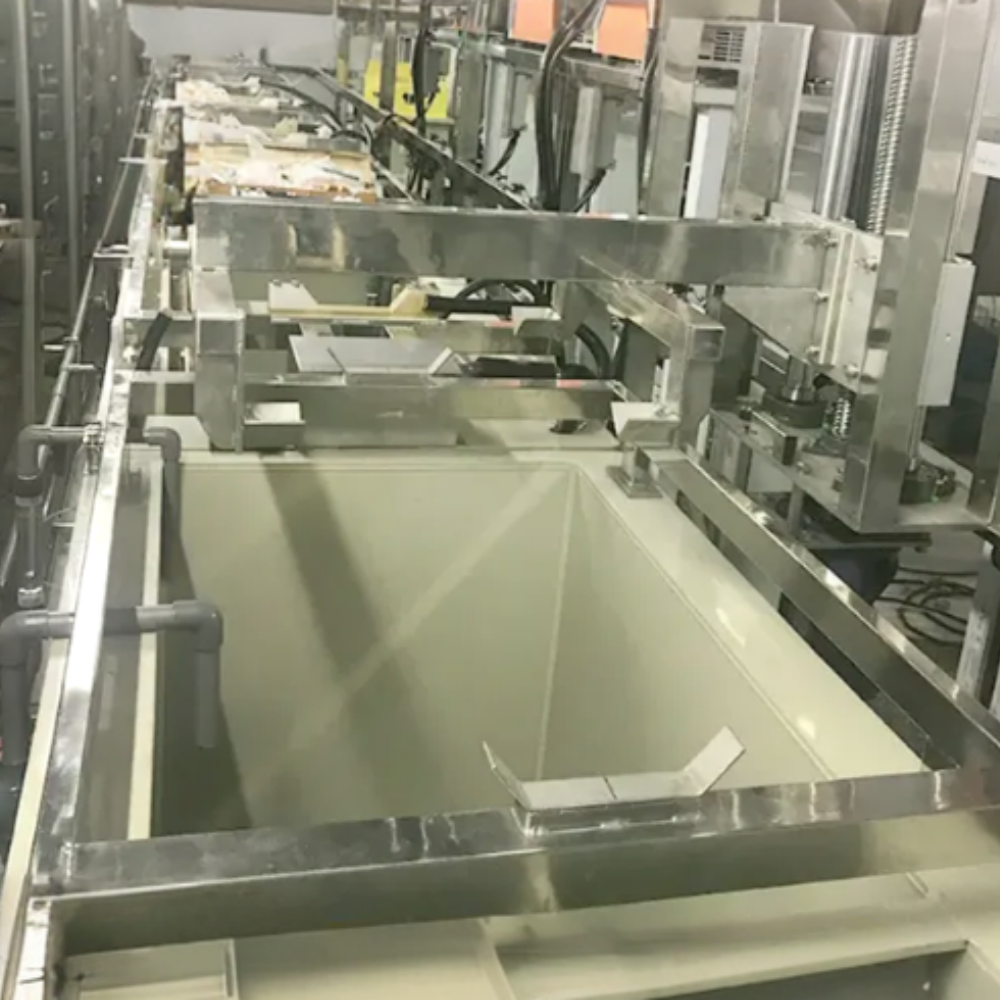
How E-Coating Lines Boost Production Efficiency in Furniture Manufacturing
Uniform Coverage on Complex Metal Frames—Reducing Rework and Material Waste
Electrophoretic deposition provides really precise coatings down to the micron level on those complex furniture frames where traditional spray techniques just don't work so well. Think about all those tricky spots like weld points, sharp corners, and inside hollow parts that regular sprays miss completely. The process basically stops those annoying issues with uneven paint layers and those pesky gaps called holidays, which cuts down on having to fix things later. According to the Finishing Industry Benchmark Report from last year, shops using this method see their rework rates drop anywhere between 60 and 80 percent. When products come out right the first time, companies save money because they aren't wasting materials stripping off bad coats and applying new ones. Plus, nobody has to spend hours doing tedious hand corrections anymore. These systems also have these closed loop circulations that actually recover around 95% of the coating stuff, so there's way less waste flying around as overspray. Look at something like fancy chair legs or those elaborate metal patio furniture sets. Manufacturers report saving roughly 15 to 25% on materials for each piece made, all while keeping that thin layer of coating within just plus or minus 2 micrometers thick.
Energy-Efficient Automation and 9-Stage Line Optimization for High-Volume Output
Today's e-coating systems rely heavily on PLCs to coordinate all those steps between pretreatment, electrodeposition, rinsing, ultrafiltration, and finally infrared curing into smooth running operations. A good setup can handle around 500 furniture frames every hour while needing only two or three workers on site. Some facilities install energy recovery systems that grab heat from the curing ovens and use it to warm up new parts coming into the line, which cuts down on overall heating costs by about 40%, according to research published in Industrial Heating Journal last year. Pumps and conveyors equipped with variable frequency drives also help save electricity by adjusting their speed based on what the production line actually needs at any given moment. These modern coating lines can switch between different products in under 15 minutes and run continuously day and night, making them ideal for manufacturers who need to produce everything from simple bar stools right up to complex bed frames without losing quality or efficiency along the way.
Quality Assurance and Long-Term Durability Delivered by Furniture-Specific E-Coating Lines
Corrosion Resistance Validated via NSS Testing and Full Interior Coverage Metrics
Specialized e-coating systems for furniture create full coverage without any pinholes, even reaching into those tricky spots like inside tubular frames and welded joints through electrodeposition techniques. When put through Neutral Salt Spray tests, these coatings show outstanding protection against corrosion. Samples can last over 500 hours before showing any signs of red rust, which beats what's required by ASTM B117 standards for outdoor metal furniture. The coating thickness stays pretty consistent around 15 to 25 microns on every surface, creating a solid barrier that stops moisture, cleaning chemicals, and other environmental nasties from getting through. Because of this consistency, manufacturers see about a 40% drop in needing to fix or redo work, and the furniture lasts much longer in tough environments such as busy coffee shops or seaside patios where salt air takes its toll.
UV- and Weather-Resistant Aesthetic Consistency for Indoor/Outdoor Metal Furniture
Furniture manufacturers use special e-coat formulas that contain UV stabilizers along with hydrophobic resins. These ingredients help keep colors looking vibrant and surfaces intact even after long periods outside. When we run accelerated weather tests that mimic about five years-worth of sun exposure, rainfall, and changing temperatures, most samples retain over 90 percent of their original shine without any noticeable fading or chalkiness appearing on the surface. What makes this coating so reliable is the electrophoretic process itself, which delivers consistent finishes across different production batches. This matters a lot when creating matching furniture lines where every piece needs to look exactly alike. Plus, these coatings resist scratches pretty well too. All these factors together mean one system can handle both the demanding conditions inside busy living spaces as well as withstand whatever Mother Nature throws at it outdoors.
Pretreatment and Curing: Foundational Stages That Define E-Coating Line Performance
The pretreatment process and curing work hand in hand when it comes to overall performance. When one step isn't done right, it affects how long things last, looks good, and what kind of output we get at the end. First up is getting rid of all those pesky oils, rust spots, and dirt particles on the surface. Surfaces that are really clean stick better to coatings. Some studies show around an 80% improvement in adhesion over surfaces that weren't properly cleaned beforehand. Next comes phosphating treatments or sometimes zirconium-based ones too. These create these tiny crystal structures on the metal that basically hold onto the electric coat film so it doesn't peel off later. Rush through these steps? Well, expect problems down the road like bubbles forming under the coating, bits falling off, or worse yet, parts failing way before they should in actual use situations.
Curing transforms the deposited film through precisely calibrated thermal cross-linking: components bake at 160–200°C (320–392°F) for 15–30 minutes—parameters tuned to the specific polymer chemistry. This molecular restructuring delivers:
- Mechanical robustness: 65% improvement in scratch resistance
- Environmental resilience: UV stability that prevents outdoor furniture fading
- Chemical resistance: Protection against household cleaners, humidity, and salt spray
| Stage | Quality Impact | Defect Prevention |
|---|---|---|
| Pretreatment | Optimizes coating adhesion | Eliminates blistering/flaking |
| Curing | Enhances hardness/weatherability | Prevents premature degradation |
When synchronized, these stages act as a quality multiplier—meticulous pretreatment enables flawless curing outcomes, while precise thermal management unlocks the full protective potential of the pretreatment layer. For furniture manufacturers, this synergy reduces rework by 40% and extends product lifespans—making both stages non-negotiable in premium e-coating operations.
Key Components of a Robust E-Coating Line for Furniture Applications
Optimizing an e-coating line for furniture manufacturing requires integrating four interlocking subsystems—engineered specifically for the dimensional diversity and functional demands of metal furniture, from delicate indoor chairs to heavy-duty outdoor tables.
Tank Design, Electrode Layout, Filtration Systems, and Curing Integration for High-Mix Flexibility
Tank geometry is tailored to fully immerse irregular profiles—minimizing solution drag-out while ensuring consistent part orientation. Paired with dynamic electrode layouts, it establishes uniform electric fields across complex geometries like bent-tube frames or multi-joint assemblies. To safeguard finish integrity:
- Multi-stage filtration removes particles <10 microns—critical for defect-free finishes during extended high-volume runs
- Closed-loop infrared curing ovens feature zoned temperature control (180–200°C / 356–392°F), preventing warping of thin-gauge steel or aluminum components
This integration achieves a 98% first-pass yield across mixed batches and cuts changeover downtime by 40% versus conventional lines—delivering flexibility without compromising precision or throughput.
FAQ
Why is e-coating better for complex metal frames?
E-coating provides precise coatings on complex frames where traditional spray methods fail, offering better coverage and reducing rework and material waste.
How does e-coating contribute to energy efficiency?
E-coating uses PLCs for smooth operations and incorporates energy recovery systems, saving heating costs by about 40% and enhancing overall energy efficiency.
What are the benefits of UV-resistant e-coatings for furniture?
UV-resistant e-coatings maintain aesthetic consistency and resist fading or chalkiness even after prolonged outdoor exposure, ensuring long-lasting vibrant colors.
Why is pretreatment essential in e-coating processes?
Pretreatment ensures optimal adhesion, preventing blistering or flaking, and plays a crucial role in successful curing outcomes and quality assurance.