
 EN
EN
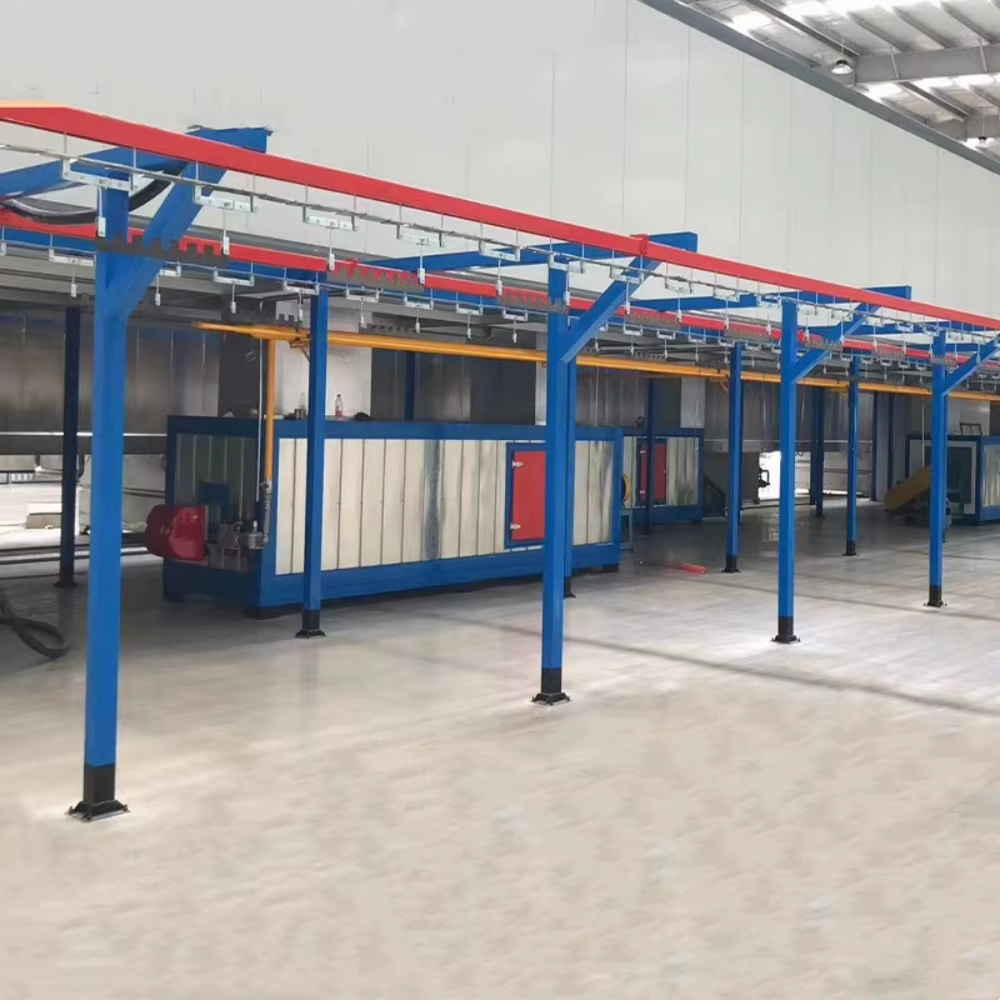
Film Thickness Precision and Uniformity: The Core Benchmark for Craft E-Coating Lines
Why ±0.5 μm Tolerance Is Non-Negotiable for Premium Batch Output
Getting that ±0.5 μm film thickness right is what really sets apart top quality craft e-coatings from regular industrial stuff. When done properly, it stops corrosion from kicking in too soon at those high wear spots and keeps everything looking uniform across special edition runs. After all, looks matter a lot these days. The Surface Finishing Journal reported back in 2023 that about three out of four buyers care mostly about how something looks when making their purchase decision for limited editions. Even small deviations around 2 μm start showing up as texture differences on curved parts, which hurts brand reputation over time. There's also this whole Faraday Cage issue to deal with. Complex shapes naturally end up with thinner coatings at the edges unless companies invest in better rectifier systems. Most serious players check how well their coatings hold up over time by doing cross section scans with SEM equipment after running through 500 or so production cycles. Why? Because even tiny changes in the chemical balance of the bath will eventually mess with those tight tolerances they're trying to maintain.
Real-Time Monitoring Integration with PLC-Controlled Deposition in Ecoating Line Operations
Modern craft-scale e-coating lines embed IoT sensors directly within anode arrays to enable millisecond-level adjustments. These systems continuously monitor three critical parameters:
- Current density fluctuations (±5 mA/ft²)
- Bath temperature differentials (±0.3°C variance)
- Film build rates during immersion phases
PLC controllers adjust voltage levels in response to ongoing resistivity measurements, which helps keep coating thickness consistent across multiple substrates in a single batch run. The closed loop system actually cuts down on thickness inconsistencies by around 63 percent when compared with older timer controlled deposition techniques according to research from Advanced Coatings in their 2024 report. We really start seeing these benefits when dealing with complex parts such as bicycle frames or decorative metal components for buildings, where standard approaches tend to miss those hard to reach corners and leave them under coated. When manufacturers automate how they compensate for changes in bath loading conditions, they end up getting first pass yields over 98% most of the time while also cutting out all those tedious manual checks for coating thickness that used to take so much shop floor time.
Electrodeposition Control: Optimizing Voltage, Time, and Bath Chemistry for Craft-Scale Consistency
Dynamic Rectifier Response and Pulse Modulation for Reliable Edge Coverage
Rectifier systems that use pulse modulation give much better voltage control, which is really important when trying to get even deposits on complicated shapes. Switching between positive and negative current cuts down on edge buildup by about 30% compared to just using direct current. This helps prevent those annoying Faraday cage effects that plague detailed parts. The system can adjust voltages on the fly as parts go into solution, something that's absolutely necessary for high quality craftsmanship. Most shops require tolerances within plus or minus 0.5 microns, and these systems make sure both how things work and how they look meet those standards.
Bath Conductivity Compensation Strategies Across Small-Batch Cycles
Conductivity problems are a common headache for small batch operations when temperatures fluctuate or paint solids get used up over time. The solution? Smart controllers that keep tabs on conductivity all day long and automatically top off the system as needed. These systems inject DI water and resin concentrate at just the right moments to keep everything balanced within about a 5% margin. Between production cycles, temperature controlled storage tanks help maintain the bath's stability. This means better consistency in finish quality throughout multiple batches without having to drain and refill the entire tank every time. Most shops find this approach saves them money in the long run while maintaining product standards.
Racking, Fixturing, and Electrical Contact Engineering for Aesthetic + Functional Coverage
The precision of your e-coating line hinges on racking and fixturing design. For batch craft production—where components vary widely in geometry and size—custom fixtures must:
- Enable 6-axis immersion angles for uniform drainage
- Provide low-resistance electrical contact points at non-critical surfaces
- Maintain rigidity during thermal curing to prevent warping
Poor contact engineering risks "burn-off" marks at clamp points and incomplete coverage in recessed features. Aerospace components with hollow cavities, for example, require precisely positioned internal anodes—not just perimeter fixtures—to achieve Faraday-cage penetration. Tier-1 manufacturers report 40% fewer finish rejects when fixture conductivity exceeds 85% of base metal efficiency.
Optimized solutions use titanium or phosphor-bronze contacts that withstand aggressive bath chemistry while enabling full encapsulation of complex geometries like turbine blades or sculptural hardware. This engineering foundation ensures both aesthetic consistency—eliminating light spots—and functional reliability—guaranteeing corrosion resistance—across small-batch runs.
Surface Preparation Synergy: Micro-Cleaning Protocols That Enable Macro-Quality in E-Coating Lines
Zinc Phosphate Crystallinity Control and Its Direct Impact on Cathodic E-Coat Adhesion (ASTM D3359)
The right zinc phosphate layer actually lays down the groundwork for strong e-coat adhesion when making crafts. Getting the crystal structure just right matters a lot too. We want those crystals to stay around 2 to 5 microns big with pretty even spacing throughout. This gives plenty of surface area for the polymer to grab onto properly. When we see larger crystals over 8 microns, they cut down on good anchor points by about 40%. And if there's not enough coverage overall, bare spots appear on the metal which leads to coatings falling off completely. The industry standard test for checking all this is ASTM D3359 tape testing. With proper pretreatment, most shops hit Class 5B results regularly, meaning no coating comes off during testing. Keeping things running smoothly requires attention to several key factors. Temperature needs to stay stable within plus or minus 2 degrees Celsius. The mix ratio between zinc and phosphate should be roughly 1 part zinc to 200 parts phosphate solution. Lastly, how long parts sit in the bath depends on how porous the material itself is.
Microscopic inspection protocols complement real-time conductivity sensors, catching crystallinity drift before batch contamination occurs. This synergy prevents peel failures—especially at edges and recesses—where inadequate phosphate coverage causes 78% of field corrosion incidents. For low-volume lines, digital microscopy provides essential redundancy against automated system gaps.
Modular Flexibility: Designing Future-Ready Ecoating Lines for Evolving Craft Portfolios
Swappable Anode Configurations and Dual-Zone Bath Segmentation for Multi-Substrate Runs
For manufacturers dealing with all sorts of materials like aluminum alloys, magnesium, and those special steel grades in small batches, having adaptable e-coating lines really makes a difference. The swappable anode systems let plants switch quickly between different shapes and sizes, which means they can coat everything from car dashboard knobs to delicate surgical tools without worrying about contamination issues. When it comes to bath setup, dual zone configurations take things even further. These setups allow chemists to tweak solutions separately for iron-based metals versus others during the same production cycle. The separation keeps unwanted chemical reactions at bay while still hitting that tight tolerance range of around 0.3 microns on thickness across completely different parts. Looking at numbers from the latest Flexible Production Survey, modular systems cut down retooling expenses by about a third and speed up production changes nearly two and a half times faster than traditional fixed systems. What this means is companies can grow their product offerings without tearing out entire coating lines and starting over from scratch.
FAQ Section
What is the significance of maintaining a ±0.5 μm film thickness in e-coating lines?
A ±0.5 μm film thickness ensures uniformity and quality, preventing early corrosion at high wear spots and maintaining the aesthetic appeal of special edition items which is crucial for premium batch outputs.
How do IoT sensors enhance the functionality of e-coating lines?
IoT sensors are embedded within anode arrays to make real-time adjustments, monitor critical parameters like current density, bath temperature, and film build rates, and integrate with PLC controllers to keep the coating thickness consistent.
What role does pulse modulation play in electrodeposition control?
Pulse modulation allows better voltage control during electrodeposition, minimizing edge buildup and enhancing coverage on complex shapes, thus ensuring high quality craftsmanship with tight tolerance adherence.
How do smart controllers help in bath conductivity compensation?
Smart controllers monitor conductivity and auto-adjust by adding DI water and resin concentrates as needed, maintaining balance and stability in the bath to achieve consistent quality without frequent tank refills.
Why is fixture conductivity important in e-coating lines?
Ensuring adequate fixture conductivity—which involves engineering optimized contact points using materials like titanium—prevents "burn-off" marks, ensures complete coverage in complex geometries, and enhances both aesthetic and functional integrity.
Table of Contents
- Film Thickness Precision and Uniformity: The Core Benchmark for Craft E-Coating Lines
- Electrodeposition Control: Optimizing Voltage, Time, and Bath Chemistry for Craft-Scale Consistency
- Racking, Fixturing, and Electrical Contact Engineering for Aesthetic + Functional Coverage
- Surface Preparation Synergy: Micro-Cleaning Protocols That Enable Macro-Quality in E-Coating Lines
- Modular Flexibility: Designing Future-Ready Ecoating Lines for Evolving Craft Portfolios
-
FAQ Section
- What is the significance of maintaining a ±0.5 μm film thickness in e-coating lines?
- How do IoT sensors enhance the functionality of e-coating lines?
- What role does pulse modulation play in electrodeposition control?
- How do smart controllers help in bath conductivity compensation?
- Why is fixture conductivity important in e-coating lines?